Method 9 • field reading guide
How to read smoke opacity in the field.
Before assigning an opacity reading, check the requirements and find a suitable viewing position. Read the correct part of the plume and record the observation conditions.
Follow the field checklist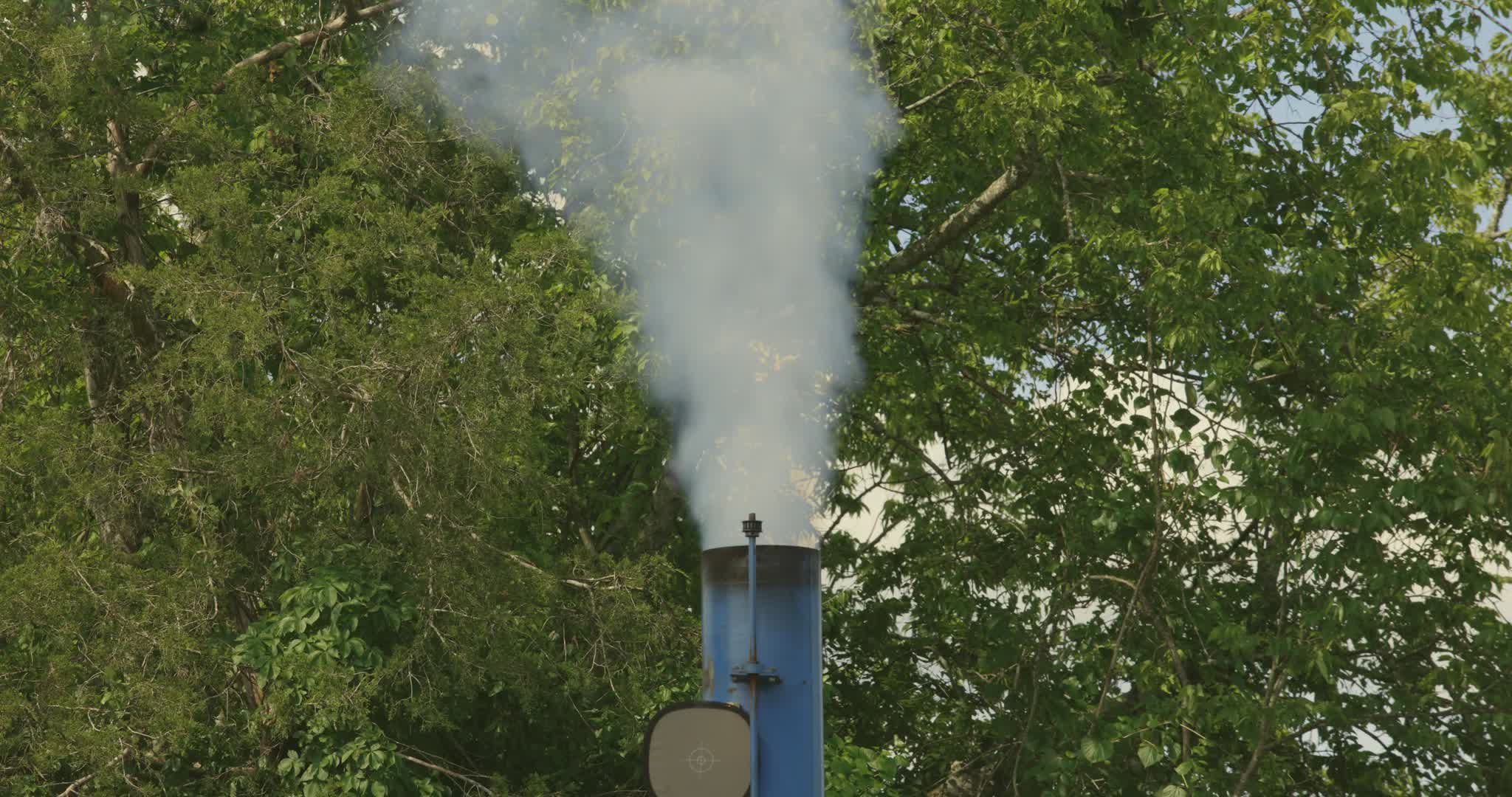
Opacity describes how much of the background is obscured. Smoke color alone doesn’t tell you the opacity.
Before and during the observation01 · Confirm the assignmentIdentify the source, applicable method, observation duration, and reporting criteria. Check that the observer’s qualification is current. 02 · Choose a clear viewing positionKeep the sun within the 140° sector behind you. As far as possible, view approximately perpendicular to the plume direction. Avoid looking through overlapping plumes. 03 · Document the setupRecord the facility and emission point, observer details, date, time, distance, wind, sky, background, and a sketch of the viewing position. 04 · Find the correct reading pointObserve the greatest opacity in the part of the plume without condensed water vapor. The reading point for attached and detached steam differs. 05 · Make momentary observationsUnder Method 9, observe momentarily at 15-second intervals and record the nearest 5% opacity. A field reading is not an estimate of the whole sky or an average over a video frame. 06 · Review and calculateKeep the readings tied to their times. Explain gaps and changing conditions; use the averaging and reporting procedure required by the applicable standard.
Six checks for your field observation.
References: EPA Method 9, sections 2 and 3 and EPA Visible Emissions Field Manual. Consult the applicable rule or permit for your observation requirements.
Steam changes the reading point
Attached or detached?
Attached steam: when water droplets are already visible at the outlet, read beyond the point where the visible water vapor has dissipated. Record the approximate distance from the outlet.
Detached steam: when condensation appears downstream, evaluate emissions at the outlet before the water vapor condenses.
A plume’s white appearance alone does not establish whether it is condensed water or another visible emission.
Common questions.
Does Method 9 use continuous observation?
Method 9 calls for momentary observations at 15-second intervals. Continuous observation is a different approach used in Method 22.
Does the same viewing position work for every source?
No. Source geometry, plume direction, nearby emissions, and the sun’s position all affect a suitable view.
Can this guide replace smoke school?
No. It is a field-reading reference. Observer qualification is a separate process.
Continue learning01 02 03
Related guides.
Try a sample
Get familiar with real plume footage. Open the guide →
Complete the record
See an annotated reading grid. Open the guide →
Compare methods
Separate opacity from emission time. Open the guide →